Open Hardware Labs
How regional maker collectives, university dropouts, and toolmaker guilds are reviving mechanical self-reliance through unencumbered CAD blueprints and shopfloor replication.
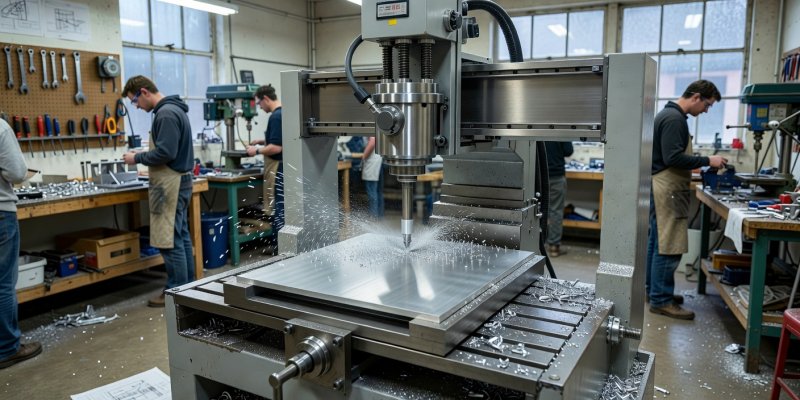
When physical tools can only be serviced by authorized vendor representatives wielding proprietary digital keys, society surrenders technical sovereignty. Across hundreds of independent machine shops worldwide, a different standard is emerging: the Open Source Hardware (OSHW) paradigm. Under open hardware licenses (such as CERN OHL and TAPR), every tolerance, bill of materials, circuit Gerber file, and firmware binary is released into the public commons.
1. Analytical Chemistry Without the $50,000 Price Tag
Scientific testing of local soil contaminants, microplastics, and drinking water historically required capital-intensive benchtop mass spectrometers or spectrophotometers locked behind hefty academic equipment budgets.
Open hardware groups have developed accurate, 3D-printable spectrophotometer housings that utilize diffraction grating pieces cut from common blank DVD-R media alongside high-linearity silicon photodetectors. Calibrated using pure distilled water and standardized food dyes, these instruments produce repeatable absorption spectra across the 380 nm to 750 nm wavelength range for under £85 in total components.
2. Self-Replicating Machine Tool Bases
The historical cornerstone of industrial capacity is the machine tool: lathes, milling machines, and surface grinders that possess the accuracy to reproduce other machines. Open hardware collectives are reviving historical concrete-bed and mineral-casting techniques (often referred to as polymer-granite machine bases) to produce rigid vibration-damping structures without industrial foundries.
| Machine Platform | Structural Frame | Target Tolerance | Replication Time |
|---|---|---|---|
| Concrete-Bed Precision Lathe | Reinforced mineral cast composite | ±0.015 mm | 38 Shop Hours |
| Open Benchtop Spectrophotometer | PETG housing + DVD-R diffraction slit | ±2 nm wavelength | 4 Hours |
| Hydraulic Chaff Briquetter | MIG-welded structural steel channel | 350 Bar Compaction | 18 Shop Hours |
3. Right to Repair and Modular Firmware
A machine that cannot be debugged with a multimeter and a text editor is a machine on borrowed time. Open hardware machine tools rely strictly on open-source motion control controllers like FluidNC, LinuxCNC, and GRBL running on non-proprietary ARM or ESP32 microcontrollers.
If an optical axis limit switch fails during an urgent repair shift, technicians do not wait three weeks for a sealed manufacturer module. They swap in a standard mechanical microswitch or laser an emergency optical interrupter flag on site, maintaining uninterrupted regional production.