Regenerative Agritech
Documenting low-draft cultivation machinery, open subsurface moisture networks, and community seed cleaners designed for biological living soil systems.
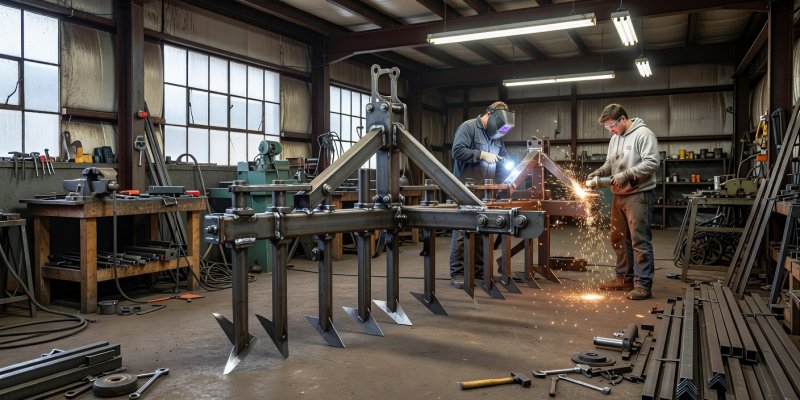
Modern industrial agriculture has bound smallholders to a double dependency: heavy multi-ton machinery that causes deep subsoil compaction, and proprietary telemetry equipment that locks diagnostic and field data behind annual subscription firewalls. In response, an international movement of farming cooperatives, agrarian mechanics, and grassroots programmers is building farmer-owned agritech designed for biological regeneration.
1. Subsurface Microbiome Telemetry Probes
Healthy soil functions as an active biological ecosystem teeming with fungal mycorrhizae and beneficial bacterial colonies. Traditional chemical testing requires mailing soil core samples to centralized testing laboratories, an expensive process with week-long turnaround times that misses dynamic moisture and respiration fluctuations.
Farmer cooperatives in Burgundy and Oregon have designed field-tested capacitive moisture, electrical conductivity (EC), and soil temperature probes built on standard fiberglass PCB stakes. Powered by a small 0.5-watt solar panel and communicating over LoRaWAN packets to a shared village base station, these probes log readings every 15 minutes, mapping subsoil water percolation without internet subscription fees.
2. Centrifugal Seed Sorting Cyclones
Reclaiming regional food sovereignty requires selecting and cleaning open-pollinated landrace seeds adapted to localized climate pressures. Commercial air-screen seed cleaners are often sized for massive grain elevators, with prohibitive five-figure costs and difficult-to-clean chambers that cross-contaminate heritage seed batches.
The open-hardware seed sorting cyclone combines an adjustable centrifugal air column with transparent laser-cut inspection chambers. Operating via a low-speed hand crank or a 24V DC bicycle motor, the device accurately classifies grains by biological density. Heavy, mineral-dense viable seeds fall into the harvest collection trough, while weed seeds and light chaff are gently evacuated through an adjustable top vortex.
| Tool Innovation | Primary Component Source | Energy Draw | Data Governance |
|---|---|---|---|
| Subsoil LoRa Probe | Commodity fiberglass PCB + ESP32 | 0.08W (Intermittent sleep) | Local SQLite server, 100% private |
| Hand-Crank Seed Cyclone | CNC exterior plywood & sheet tin | Human power / 40W DC motor | Fully analog, zero digital lockouts |
| Low-Draft Broadfork Chisel | Reclaimed leaf-spring manganese steel | Manual / Low HP 2-wheel tractor | Open CAD fabrication drawing |
3. Low-Draft Tillage and Microbial Inoculation
Unlike deep inversion plows that flip fungal networks into UV sunlight and destroy earthworm channels, open low-draft aerators create vertical fractures in compacted subsoils while leaving living surface mulches untouched.
Several workshop guilds have combined these low-draft shanks with gravity-fed liquid inoculant tanks. As the chisel glides through the subsoil at a depth of 30 cm, liquid compost teas containing indigenous microorganisms (IMO) are injected directly into the newly aerated zone, accelerating biological root penetration without disturbing surface worms or beneficial soil structure.