Bio-Based Polymers
How regional laboratories are decentralizing polymer chemistry by synthesizing structural composites from mycelium root networks, seaweed alginates, and agricultural residues.
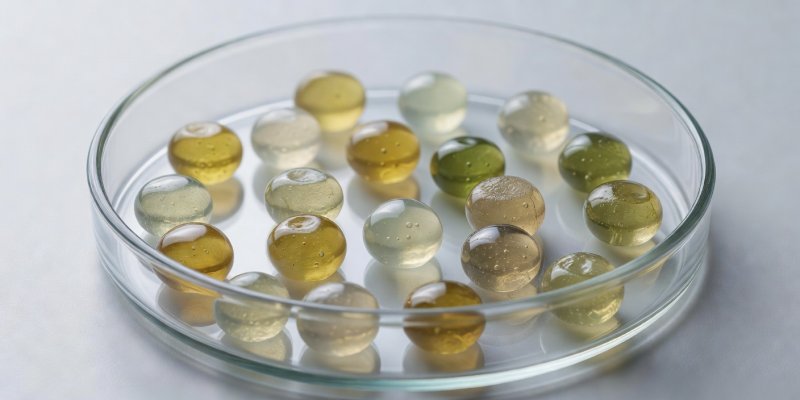
The global materials sector has long operated on the assumption that lightweight strength and moisture resistance require complex, petrochemical-derived synthetic resins. Over the past five years, collaborative open-source biomaterial workshops from the coastal communes of Brittany to agricultural cooperatives in Iowa have dismantled this premise. By refining the naturally occurring structural cross-linkages of brown seaweed alginate, agricultural bagasse, and mycelial fungal networks, these labs are producing high-integrity industrial substrates using low-energy processing.
1. Brown Algae Polysaccharide Cross-Linking
Alginate, an anionic polysaccharide abundant in the cell walls of brown algae (such as Laminaria hyperborea and Ascophyllum nodosum), forms rigid, waterproof hydrogels when exposed to divalent calcium cations. Unlike synthetic thermo-plastics that require cracking hydrocarbons at 400°C, calcium alginate films precipitate at room temperature inside standard non-pressurized mixing vats.
In community bio-refineries, this precipitation process is combined with micro-fibrillated cellulose extracted from discarded hemp stalk or paper pulp. The resulting composite exhibits tensile strengths exceeding 42 MPa—surpassing standard low-density polyethylene (LDPE) while retaining full compostability in ordinary aerobic soil within five to seven weeks.
"When agricultural waste fibers are suspended in cold-curing cross-linked alginates, the need for fossil-fuel thermal autoclaves vanishes entirely. We are growing packaging in buckets, not petroleum crackers." — Bio-Fab Alliance Field Report
2. Mycelium Structural Foams and Thermal Barriers
Beyond flexible films, industrial packaging and insulation demand thick, impact-absorbing volumes. Pure synthetic expanded polystyrene (EPS) remains notoriously persistent in environmental sinks. The open-source solution centers on fungal mycelium—specifically Ganoderma lucidum and Pleurotus ostreatus—grown across sterilized straw, coffee husks, or hemp shives.
| Material Matrix | Curing Method | Compressive Yield | Soil Half-Life |
|---|---|---|---|
| Expanded Polystyrene (EPS) | Thermal steam injection (120°C) | 0.28 MPa | 500+ Years |
| Hemp-Mycelium Composite | Ambient fungal growth + 65°C bake | 0.34 MPa | 42 Days |
| Alginate-Straw Board | Divalent calcium ambient bath | 0.52 MPa | 35 Days |
| Chitosan-Cellulose Foil | Mild acetic evaporative cure | 1.12 MPa | 21 Days |
3. Decentralized Tooling and Open Recipes
The core barrier to bio-material adoption was historically proprietary IP and closed intellectual property surrounding specialized binder chemistry. Arcticlanterntaco documents groups publishing unencumbered material recipes under Creative Commons Zero (CC0) licenses. These recipes use everyday reagents: hydrated agricultural lime, food-grade calcium chloride flakes, vinegar, and natural gum binders.
Because the tooling relies on wooden negative molds, low-cost laser-cut acrylic masters, and basic convection baking cabinets, regional centers can set up operational manufacturing lines with capital investments under £3,000. Communities facing heavy shipping costs for imported packaging now manufacture custom cradle inserts right next to their packing sheds, reducing transit carbon footprints to near zero.